
When to Choose Carpet, Wood, LVT, or Tile for Your Space
Choosing flooring is one of those home decisions that feels simple until you start living with it. A plush carpet may look perfect in a showroom, but not so perfect after muddy footprints from the garden. A beautiful wood floor can lift a whole room, but it needs to suit the way the room is used.
The best floor is rarely just the one that looks nicest. It should suit the room, your routine, your budget, and the level of cleaning you are happy to keep up with. If you are wondering how to choose the right flooring for your home, start with how each space behaves day to day.
Start with the room, not the material
Before comparing carpet vs wood vs LVT, think about what the room has to cope with.
A bedroom has very different needs from a hallway. A utility room near the back door has to deal with wet shoes, pet paws, laundry baskets, and cleaning products. A lounge may need comfort and warmth. A kitchen needs a floor that can handle spills without causing panic.
Ask a few simple questions:
How much foot traffic does the room get?
Is moisture likely, such as water, steam, or wet shoes?
Do pets or children use the space often?
Do you want softness underfoot or easy cleaning?
Is this a long-term home improvement or a practical refresh?
Once those answers are clear, narrowing down the best flooring options for Hertfordshire homes becomes much easier.
Choose carpet when comfort matters most
Carpet is still one of the best choices for rooms where warmth, softness, and quiet are the priority. It works especially well in bedrooms, snug rooms, staircases, and some lounges.
If the question is “is carpet good for bedrooms”, the answer is usually yes. Most people want a bedroom to feel calm and comfortable. Carpet helps soften sound, feels warm on bare feet, and makes the room feel more settled.
The best rooms for carpet are usually:
Bedrooms
Staircases and landings
Cosy lounges
Playrooms where comfort matters
Carpet is less ideal in spaces where water, food spills, or heavy dirt are regular visitors. That does not mean it cannot work in a dining room or family room, but the choice of fibre and colour becomes more important. A pale, deep-pile carpet in a busy hallway with dogs and school shoes is asking a lot.
For busy homes, look for a carpet that balances softness with durability. Twist pile carpets, for example, often cope better with regular use than very deep, loose styles. If stains are a concern, stain-resistant options can make daily life a lot easier.
Carpet also deserves a good underlay. Underlay is the layer fitted beneath the carpet. It improves comfort, helps with insulation, and can extend the life of the carpet.

Choose wood when character and longevity lead the list
Few floors have the natural character of wood. It brings warmth, texture, and a sense of quality that suits both period homes and modern interiors. In areas like St Albans and Greater London, where many homes mix older features with newer extensions, wood can tie spaces together beautifully.
The main choice is often solid wood vs engineered wood flooring.
Solid wood is made from one piece of timber. It can be sanded and refinished several times, depending on its thickness. It is beautiful, but it can move more with changes in temperature and moisture.
Engineered wood has a real wood surface on top, with layered timber beneath. Those layers help make it more stable. In plain English, that means it copes better with normal changes in the home. It is often a strong choice for living rooms, dining rooms, hallways, and open-plan spaces.
So, are wood floors durable? Good quality wood floors can be very durable, but they are not indestructible. They can scratch from grit, furniture legs, pet claws, or dragging heavy items. The good news is that small marks often blend into the natural look over time, especially with oiled or textured finishes.
Wood is a good fit when you want:
A natural, premium feel
A floor that can age well
A timeless look rather than a trend-led finish
A surface that works with rugs, furniture, and changing décor
Wood can work in kitchens in the right circumstances, especially with a quality engineered board and sensible care. Wipe up spills, use mats near sinks and doors, and avoid letting water sit. For bathrooms and utility rooms, most households will find LVT or tile more practical.
Choose LVT when you want style with easy living
Luxury vinyl tile, usually called LVT, has become popular for good reason. It can look like wood, stone, or tile, but it is warmer and softer underfoot than many hard surfaces. It also tends to be easier to maintain.
The benefits of luxury vinyl tiles are strongest in busy, practical spaces. LVT suits kitchens, bathrooms, hallways, playrooms, and open-plan family areas. It is particularly useful where people want the look of timber or stone without the same upkeep.
A common question is “is LVT waterproof”. Many LVT products are water-resistant or waterproof at the surface, which makes them a good choice for spills and splashes. The installation still matters. If water gets beneath the floor through poor fitting or damaged edges, problems can still happen. That is why preparation and fitting are just as important as the product itself.
LVT for kitchens and bathrooms makes a lot of sense when daily life is busy. Picture a Saturday morning with cereal on the floor, wet footprints after the garden, and a dog shaking off rain near the back door. LVT handles that sort of routine well.
It is also helpful in flats and family homes where noise is a concern, as it can feel quieter than tile when paired with the right preparation.

Choose tile for strength, water resistance, and heavy use
Tiles are hard to beat in rooms that see water, dirt, and heavy wear. Porcelain and ceramic tiles are common choices. Porcelain is usually denser and less porous, which can make it a strong option for kitchens, bathrooms, boot rooms, and entrance halls.
Floor tiles for high traffic areas work particularly well when the space has to handle a lot. Think of a hallway with bikes, prams, muddy boots, and shopping bags. Tiles will not suit every home or every foot, as they can feel harder and cooler than other floors, but they are tough and easy to clean.
Tiles are often among the best flooring for utility rooms, especially where washing machines, wet coats, pets, and cleaning buckets are part of everyday life.
Underfloor heating can make tiles feel much more comfortable. The subfloor, which is the surface underneath the finished flooring, must be suitable and properly prepared. If the base is uneven or unstable, tiles can crack or loosen over time.
Tiles are a good choice when you want:
Excellent water resistance
A very hard-wearing surface
Simple cleaning
A smart finish for kitchens, bathrooms, and entrances
Grout lines need some care, especially in lighter colours. Choosing a mid-tone grout can be more forgiving in a busy family home.
Compare the main options side by side
Flooring | Best for | Think twice if |
Carpet | Bedrooms, stairs, cosy lounges | The room gets wet, muddy, or messy often |
Wood | Living rooms, dining rooms, hallways | You need a fully waterproof floor |
LVT | Kitchens, bathrooms, family spaces | You want a natural material rather than a practical lookalike |
Tile | Utility rooms, bathrooms, entrances | You dislike hard or cool surfaces underfoot |
The right answer is often a mix. Many homes work best with carpet upstairs, wood or LVT through living spaces, and tile or LVT in wet rooms. Matching every room with the same material can look neat, but it is not always the most practical choice.

Let daily life make the final decision
A floor is part of the background to normal life. It should cope with school runs, pets, guests, rainy days, dropped cups, and the odd DIY mishap. That is why hard flooring vs carpet is less about which is better overall and more about which is better for that room.
For how to pick flooring for busy families, keep it simple:
Use carpet where comfort matters most.
Use engineered wood where you want natural warmth with better stability.
Use LVT where spills and easy cleaning are part of the routine.
Use tile where strength and water resistance are the top priorities.
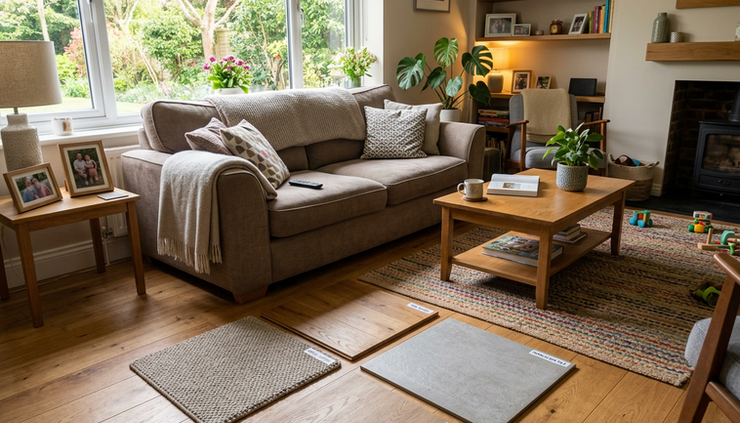
Also think about light. A flooring sample can look very different in a St Albans townhouse, a Hertfordshire village cottage, or a Greater London flat. Always view samples in the actual room, during the day and in the evening, before making the final call.
The right flooring should look good on day one, but more than that, it should still feel like the right decision on a wet Tuesday evening when everyone comes through the door at once. Choose for real life first, then refine the colour, texture, and finish around that.


Comments