
How to Clean Dog Pee from Carpet (Dog and Cat)
To clean dog pee from carpet, blot up the wet patch straightaway, rinse with cool water, then treat it with an enzyme cleaner that breaks down the urine at its source. Speed matters most with a fresh accident. For dried-in pee or a smell that keeps returning, the urine has usually soaked deeper, and that needs a different approach. Here's how to handle both dog and cat urine properly.
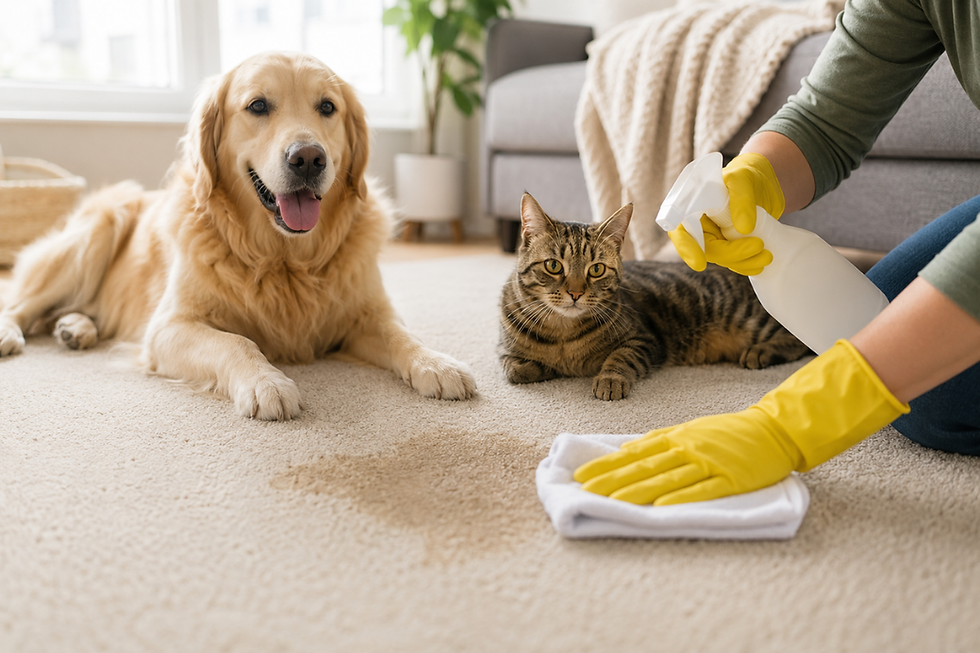
Why pet urine is harder to clean than other stains
Pet urine is tougher than most stains because of what it leaves behind. As it dries, it forms uric acid crystals that bond into the carpet fibres and reactivate whenever the air gets humid. That's why the smell keeps coming back days or weeks later, even after you've cleaned the spot and it looked fine.
Ordinary carpet cleaners and household remedies mask the smell for a while, but they don't break down those crystals. Until the uric acid is actually dealt with, the odour will keep returning. This is the single reason so many people clean the same patch over and over and never fully win.
How to clean fresh dog pee from carpet
For a fresh accident, blot up as much urine as you can, dilute with cool water, then treat with an enzyme cleaner and blot dry. Acting within the first few minutes gives you the best chance of removing both the stain and the smell before it soaks into the backing. The faster you get to it, the easier the whole job is.
Lay clean kitchen paper or a white towel over the patch and press down to soak up the urine. Stand on it if you need to.
Dilute the area with a little cool water, then blot again to lift more of the urine out.
Apply an enzyme-based pet urine cleaner, following the label, and let it dwell so it can break down the uric acid.
Blot the area dry with a fresh clean cloth, working from the outside in.
Once dry, sprinkle bicarbonate of soda over the spot to absorb any last odour, leave it a few hours then vacuum.
Don't use hot water and don't scrub hard. Heat can set the stain, and scrubbing pushes the urine deeper into the pile. For how this compares to tackling other spills, our guide on removing any carpet stain covers the wider rules.
How to get dried dog pee out of carpet (and find hidden spots)
Dried-in urine needs rehydrating before an enzyme cleaner can work, and you need to find every spot first. Old dog pee and cat urine both leave uric acid crystals that a surface clean won't touch, so the trick is locating the full extent of the contamination, then treating it thoroughly and repeating.
Finding hidden urine spots
Old accidents aren't always where you think. Trust your nose in humid conditions when the smell is strongest, and run your hand over the carpet to feel for stiff or crisp patches where urine has dried. A UV torch in a dark room is the most reliable method, as dried urine glows under ultraviolet light and shows you the true size of each stain, which is often far bigger than the visible mark.
Treating a dried-in stain
Once you've found the spots, work through them one at a time.
Lightly mist the dried area with cool water to soften and reactivate the residue.
Apply a generous amount of enzyme cleaner so it reaches as deep as the urine did.
Cover the spot and let it dwell for the full time on the label, sometimes several hours, so the enzymes can break down the crystals.
Blot up the moisture, then let the area dry fully.
Repeat the treatment if the smell lingers. Dried-in urine, especially cat urine, often needs more than one round.
Be realistic. A dog accident caught within a day usually clears well, but old cat urine that has soaked in for weeks may improve a lot yet still hold a faint smell, particularly if it's reached the underlay.
Enzyme cleaners vs home remedies (vinegar and bicarbonate of soda)
Enzyme cleaners are the only home option that actually breaks down the uric acid crystals in pet urine. Vinegar and bicarbonate of soda help with surface odour and freshness, but they don't remove the crystals, which is why the smell returns. Knowing what each one does saves you a lot of wasted effort.
Method | What it does | Limitation |
Enzyme cleaner | Breaks down uric acid crystals that cause the stain and smell | Needs full dwell time and must reach as deep as the urine |
White vinegar solution | Neutralises some surface odour and helps lift fresh marks | Doesn't break down dried crystals, so the smell can come back |
Bicarbonate of soda | Absorbs moisture and masks odour once the area is dry | A finishing step only, not a standalone treatment |
Washing-up liquid in cool water | Lifts the visible stain from a fresh accident | Does nothing for the odour-causing crystals |
The takeaway is simple. Use vinegar and bicarb as helpers, but rely on a proper enzyme cleaner to actually solve the problem.
Dog wee vs cat urine: what's different
Cat urine is generally harder to clean than dog wee because it's more concentrated and pungent, and cats tend to mark the same spot repeatedly. Dog accidents are usually a larger volume of more dilute urine, often on a one-off basis, which makes them easier to lift if you catch them fresh.
The method is the same for both, but expect cat urine to need more enzyme cleaner, longer dwell times and more repeat treatments. Repeat marking is also a bigger issue with cats, so once the spot is properly clean it's worth making sure they can't smell any trace that draws them back.
When the smell won't go: the underlay problem
If a urine smell keeps returning no matter how often you clean, the urine has almost certainly soaked through into the underlay or subfloor, where no surface treatment can reach it. At that point home methods won't fix it, and the contamination needs proper extraction or, in bad cases, lifting the carpet to treat what's underneath.
Signs the problem is deeper than the surface:
The smell comes back every time the weather turns humid.
One spot has been marked repeatedly over months.
You have multiple pets and the odour covers a wide area.
The carpet feels stiff and stained right through when you check the back.
Repeated cleaning improves things briefly, then the smell returns.
Professional treatment works differently to anything you can do by hand. Deep extraction flushes the urine and enzyme solution right through the pile under controlled moisture, and equipment like the Airflex Storm high pressure extractor reaches contamination that surface blotting leaves behind. In severe cases the carpet is lifted so the underlay and subfloor can be treated or replaced. If a smell has beaten every attempt, it's worth having our carpet cleaning team in Hertfordshire assess how deep it's gone. Odour that has spread into sofas and soft furnishings is a slightly different job, and our guide on removing lingering pet smells covers that side.
Why homeowners across Hertfordshire trust a specialist
There's a real difference between a general cleaner and a proper restoration specialist, and with pet urine that difference is what finally kills the smell. We've spent over a decade restoring carpets and floors across Hertfordshire and North London, with 142 Google reviews at a 4.9-star rating behind the work. We use non-toxic solutions that are safe around pets and children, which matters when the whole point is a home your animals live in. If you're weighing up the cost of sorting it properly, our guide on what carpet cleaning typically costs in the UK gives you a realistic picture.
Frequently Asked Questions
What kills the smell of dog urine in carpet?
An enzyme-based cleaner kills dog urine smell by breaking down the uric acid crystals that cause it. Vinegar and bicarbonate of soda only mask the odour, so the smell returns until the crystals are removed.
How do you get dried dog pee out of carpet?
Rehydrate the dried patch with cool water, apply a generous amount of enzyme cleaner and let it dwell for several hours. Blot dry and repeat if needed. Dried-in pee often takes more than one treatment.
How do you clean dog pee out of carpet with a home remedy?
Blot up the urine, then apply a mix of white vinegar and water followed by bicarbonate of soda once dry. This helps a fresh accident, but an enzyme cleaner is needed to fully remove the odour.
Does vinegar neutralise pet urine?
Vinegar neutralises some surface odour and helps lift fresh urine, but it doesn't break down the uric acid crystals in dried urine. For a lasting result you need an enzyme cleaner, not vinegar alone.
Why does cat pee smell keep coming back?
Cat urine dries into uric acid crystals that reactivate with humidity, so the smell returns whenever the air is damp. Only an enzyme cleaner that breaks down those crystals stops it for good.
Can pet urine be fully removed from carpet?
Fresh accidents usually clear completely if treated fast with an enzyme cleaner. Old or deep urine that has reached the underlay may need professional extraction, as surface cleaning alone can't reach that far.
Is dog or cat urine harder to clean from carpet?
Cat urine is usually harder. It's more concentrated and pungent than dog wee, and cats often mark the same spot repeatedly, so it needs more enzyme cleaner, longer dwell times and more repeat treatments.
Struggling With a Smell That Won't Shift?
If you've cleaned the same patch again and again and the smell keeps creeping back, the urine has likely gone deeper than a home clean can reach. We deal with stubborn pet urine and odour in carpets across Hertfordshire and into North London, using deep extraction and pet-safe enzyme treatment that gets to the root of it. Call us on 07897 954433 or send a few photos through the quote form for a free no-obligation assessment, and we'll tell you honestly what it'll take to sort.


Comments